

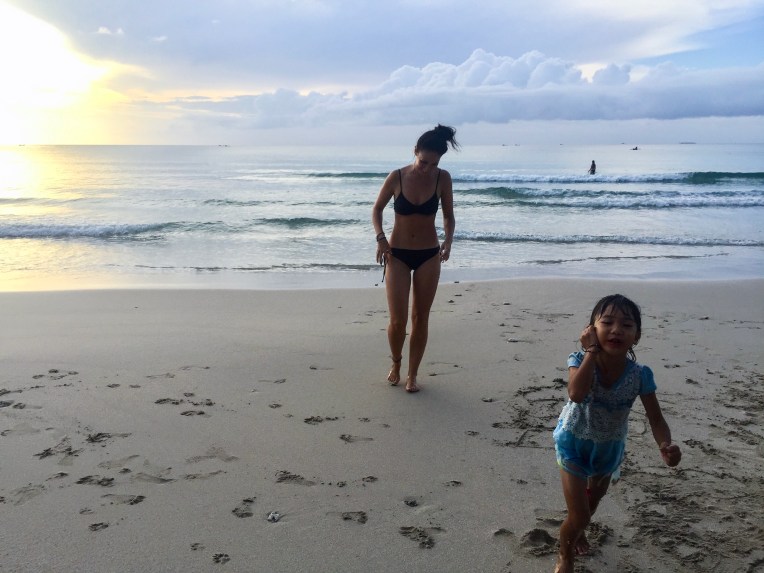
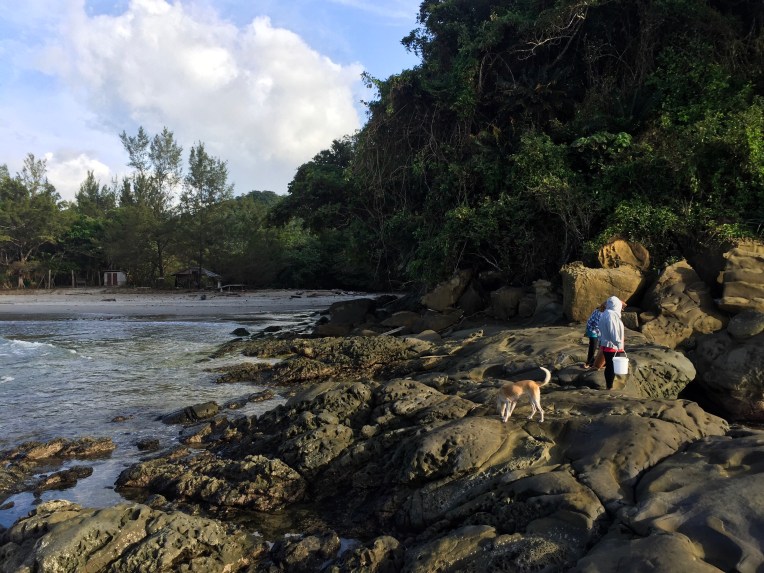
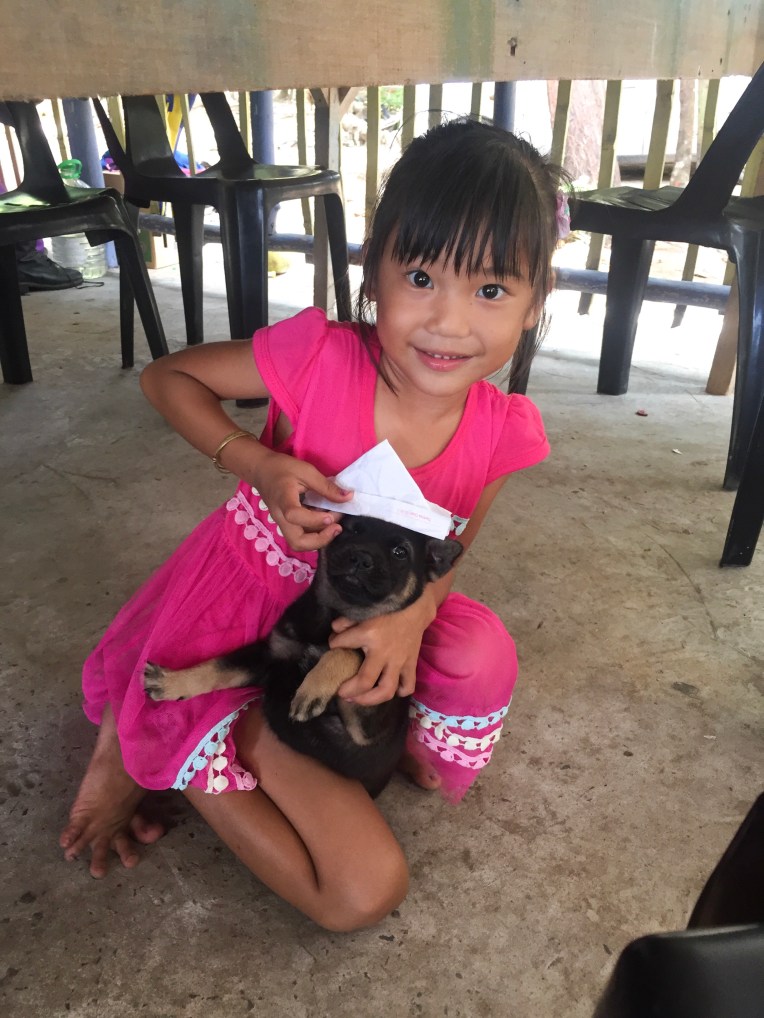
Another Local’s Perspective, this time from Kudat, Sabah, Borneo. The Secret Place, run by Roby, 36, father of 7 children, was recommended to us by different people in Kota Kinabalu, so we decided to check it out. I seriously recommend going there, if you get the chance. I am so happy to have met Roby and his beautiful family (and his puppies) and thankful that he shared his thoughts about his life and country with me.
How was growing up in Borneo and how is it now for your kids?
I come from a very poor family, which is why I did not continue my studies and I dropped out after form 5 (17 year old). I was always thinking that I would like to continue my studies someday, but it is a difficult life, because I come from a poor background. We always lived on this land, where The Secret Place is now. I met my wife here at school and we got married when I was 18 and she was 16. Life was very difficult back then, because I didn’t have a job, all I did was taking coconuts and selling them. So, it’s a big difference between the past and now. Right now it is still not so easy, but at least I do something for my family. When I had my oldest son, we moved to Kota Kinabalu (KK) until I had 5 children. We stayed in KK for 7 years and I was working for the government there. I quit my job, because there is just so much corruption. That’s why I came back to the village and I found my life here. I don’t like living in the city and I like seeing my kids growing up right in front of me. And I just love nature here as well. In 1990 this place was still all jungle, so I grew up in the jungle and right next to the ocean.
Regarding my kids, I don’t want them to become like me, I want them to have a high level education. I want success for all of my kids, studying, maybe even abroad.
Elviano, Robby’s 12 year old son, wanted to answer the question as well
I am going to school, helping my dad since I was 10 years old around the restaurant and the camp ground. I want to be an astronaut when I am older and that’s why I need to be good in maths and in science, but it’s hard. I’ve been learning English since grade 1 and sometimes foreigners come here and talk English to us and we can play with their kids. I’ve been teaching myself how to play the guitar and when foreigners come here, I can play with them.
Why did you decide to quit your last job in order to open the secret place?
I worked with the women department of Sabah. There are so many single women in Sabah, every year around 500, who are in need of governmental support, but are barely receiving it, because the government keeps half of the money (approximately 5,000) that these women should get for themselves. And I did not like that. Also, I wanted to go back to where I grew up, so I quit my job in 2012.
How were the beginnings of The Secret Place and what is your future plan for it?
I started The Secret Place in 2015. Before I officially ran this place, I had English people staying with me, who did research about the beach and the ocean and were helping the environment. And then I had the idea, because I realized how simple and easy it is to look after foreigners. You need water, food and the toilets. By now, we could approximately host 130 people on the camp grounds. We work without any extra help, just my family and I, because it is hard to find somebody to trust with the work around here. But sometimes we also have volunteers staying with us.
My future plan for the place is to make it look more beautiful without destroying nature. I would love to plant my own veggies without using poison and maybe, when I succeed, I want to get rid of all of the plastic, because this is a big problem in the world. Of course, I need money, but money is just the secondary thing. We continue to survive, me and my family. Maybe in the future they will continue what I am doing here.
What is the difference between Borneo and Mainland Malaysia?
There is a very big difference between Kuala Lumpur and Borneo for example. In West Malaysia, Chinese stick to Chinese, Indians stick to Indians and Muslims to other Muslims. There are sometimes conflicts between Muslims and Christians. This is very bad for me. Between Christians and Muslims, it doesn’t matter, they should both always teach the good things, not the bad. Overall, politics make it worse as well, which is why there is such a big divide between cultures. I don’t like the government in Malaysia. If you are not one specific religious group, it is hard for you to get a job, just because of your religious views. Before, I have never seen any difficulties, even when you are Muslim, Buddhist or Chinese, we can still sit with each other. However, it is changing a little bit, because Muslims coming from Western Malaysia and Christians are clashing more and more, because of different world views (for example Christians eat pork). For me, the Koran is almost like the Bible. In Western Malaysia, you can see a trend that people try to convert Christians to Muslims by making it mandatory to go to religious classes. If you go to university, you have to follow Muslim rules, so it’s more dominant there. My little brother goes to university in Kuala Lumpur and has to visit the Mosque to learn about Koran. But in Borneo, especially in Kudat, that has never been a problem. There were always Christians and now more and more Muslims, but we all get along.
Development, struggles and opportunities of the country in your opinion over the past years?
The development here is crazy. Especially regarding the growth of palm oil plantations and the entire industry. For me, I don’t like palm oil, like us here, we still use underground water, so if palm oil is around you, you get poisened, because they always use th strong poison. I believe all the chemicals go in the ground and then the water is getting poisoned, so it’s very bad for the environment.
In Borneo in general, the government always promises stuff and never does anything. This year, they want to develop one hospital, but they never did it. Government schools for the local people is another example. Everything should be free, but nothing ever comes through. So, I have to pay a little amount for the kids to go to school. But just imagine, if you don’t have a job or don’t earn a lot of money – it’s difficult. For me there is just one thing in my mind – the government has to give back. Sabah is a rich country, but the government only gives 5% of everything that is earned here back. Like in Germany, if you have a baby the government gives you a small amount, here you get nothing. So, the biggest struggle is no governmental support.
The biggest opportunity is that Borneo is beautiful, so we have a big future for tourism. But if the palm oil is still developing further, I think Borneo won’t be beautiful anymore. The government has to stop the palm oil industry. They have to plant coconut again, it’s healthy. Just imagine everybody eats palm oil, it’s in everything. It’s not healthy. For me you don’t have to change the world, just go back to nature. My wife’s grandfather lived until he was 125, because they lived healthy, that is before they had palm oil. I never saw palm oil. And now many people are getting sick, die earlier, only getting around 40-60 years old. And in my opinion, it is because of the food, which is less healthy. Government has to think what is best for the health and future of its people. It’s always about big companies, just money money money.
Besides the Palm oil industry, what else would have to improve?
Another important thing is actually that people here also have to start recycling again, the plastic. They don’t have factories for that her, so they just throw it in the rubbish stations or they burn it on the side of the roads, no recycling at all. That causes lots of problems with pollution and rubbish everywhere.
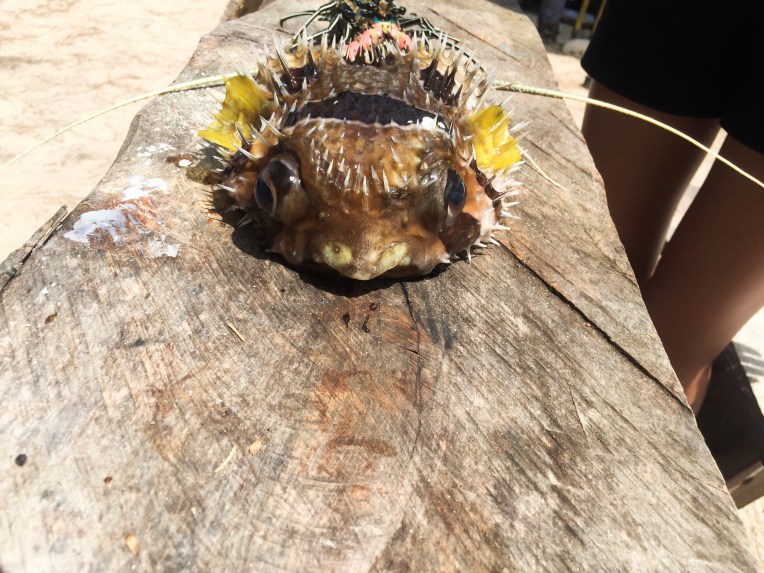
For the tourism industry it would be important to save the ocean. They have police everywhere to make sure nobody does harm to the fishes, for example in some places the fishermen catch the sharks and cut the fin and throw them back to the sea. For example if you want to catch the shark, you don’t have to throw it back just take it all. It’s hard to say if it’s better to not catch the shark at all, because people that stay at the ocean need to catch the fish to eat. But I think everybody should just catch what they need for themselves and don’t produce waste.
How would you describe Sabah in three words?
I would say the following, that I would to live by in Sabah: Love for nature – don’t destroy nature, otherwise there will be no more for us and our kids, bring back nature here. Then love for each other – no matter if you are Muslim, Christians, Buddhist, you have to love each other, all the people in the world have to learn this and finally understand it. And lastly responsibility – because this is my style, everybody has to live responsibly. If you see trash, put it in the bin. Or if you see wrongdoing you have to tell people that and stand up for one another.
What are your favorite places in Sabah/Borneo and why should people visit here?
Except from my place you mean? I really love all the places around Kudat, but especially here, because me and my family we already started looking after the beach, It is not 100%. clean, but at least we do something. Because it is very hard to make sure the beaches are clean here, it always washes up more trash from the ocean. In Kudat, we still have coral, because not a lot of people know it’s beautiful to snorkel here, so there are many things to see in the water.
What is typical food in Sabah that you love to eat?
If you come to Borneo, you have to try our traditional food, especially Rungus, as I am from the Rungus tribe. For our traditional food we never use cooking oil and never use seasoning. We normally eat white veggies from the forest and the jungle that is why it is healthy. We just boil it with some coconut milk. If we need oil, we take the coconut and boil the milk until it’s dry and then you have oil. Cassava leaves, wild veggies, we just take it from the jungle, so real organic. My favorite dish is probably fresh fish, you just boil it with ginger and that’s it, just with a little salt and the cassava leaves and you can also take the snails from the sea and we boil it with coconut oil with hot chili.
Which traditions does your tribe have?
Our old people believe in the spirits and we have rituals for that. But nowadays we don’t do that anymore. If you want to undertake the ritual it is not so easy, because you have a long process, to call the spirits, you have to kill a chicken and use the blood to call the spirit. It is really hard to explain.
Another tradition that we have is our dance, we call it Mongigol. This is our traditional dance, and normally one man and six girls perform it with a musical instrument that we call gong. Usually we do Mongigol for the harvest festival and everytime we have a wedding. It’s really beautiful. And last year our cultural group has been to Berlin to show our culture there. I don’t know how to do the dance, not all the people do, it’s very difficult for me. Even the music instrument, I don’t know how to play it.
Then there is something they call Sinamu, they eat this on a special day. It’s the jack fruit and its very salty in combination with wild ginger. And we have our own language as well, the Rungus language and at the same time also the old Rungus language as well. Old people talking to us in our language, but there is so much we don’t understand, because the old language is so different.
Thank you, Roby
 rannaway - diary of a traveler
One thought on “The Local’s Perspective – Tip of Borneo Edition”