
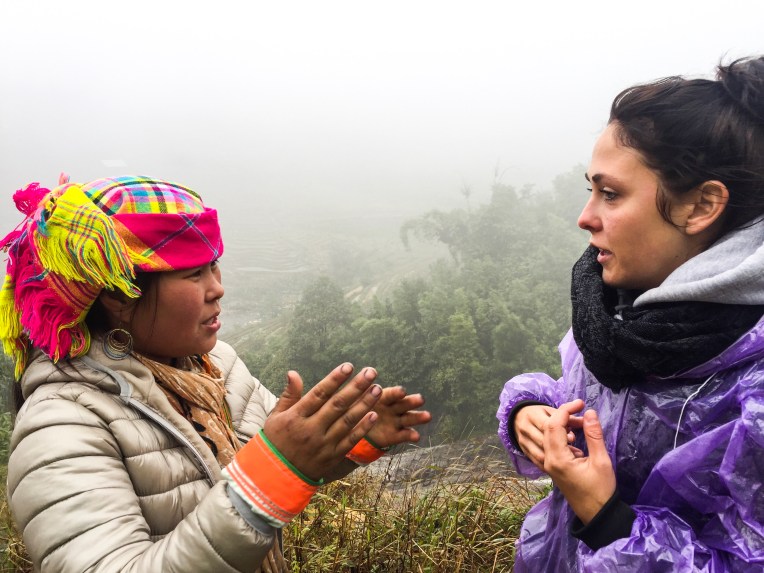
During our stay in Vietnam, we drove up to Sapa to visit the rice fields and to experience a more remote lifestyle in the north of the country, away from the craziness of Hanoi. There, we met Soso, our 22 year old young woman from the Black H’mong tribe, who is living in the Tan Van village with her family and has been working as an English speaking guide for only a couple of months. Even though the Black H’mong are partly located in Vietnam, they do not identify as Vietnamese and have their own traditions and customs.
How is and was growing up and living in the village for you?
We lived a very simple live. My parents made clothes from hemp and had their rice patties. When I was 10 years old, I started helping my mother out with making our traditional clothings and planting and cutting the rice fields. We had to help around the house a lot. And when I was 13, I got married to my husband (who was 15 at the time) and had my first child when I was 15 years old. But I still went to secondary school until I was 17 years old.
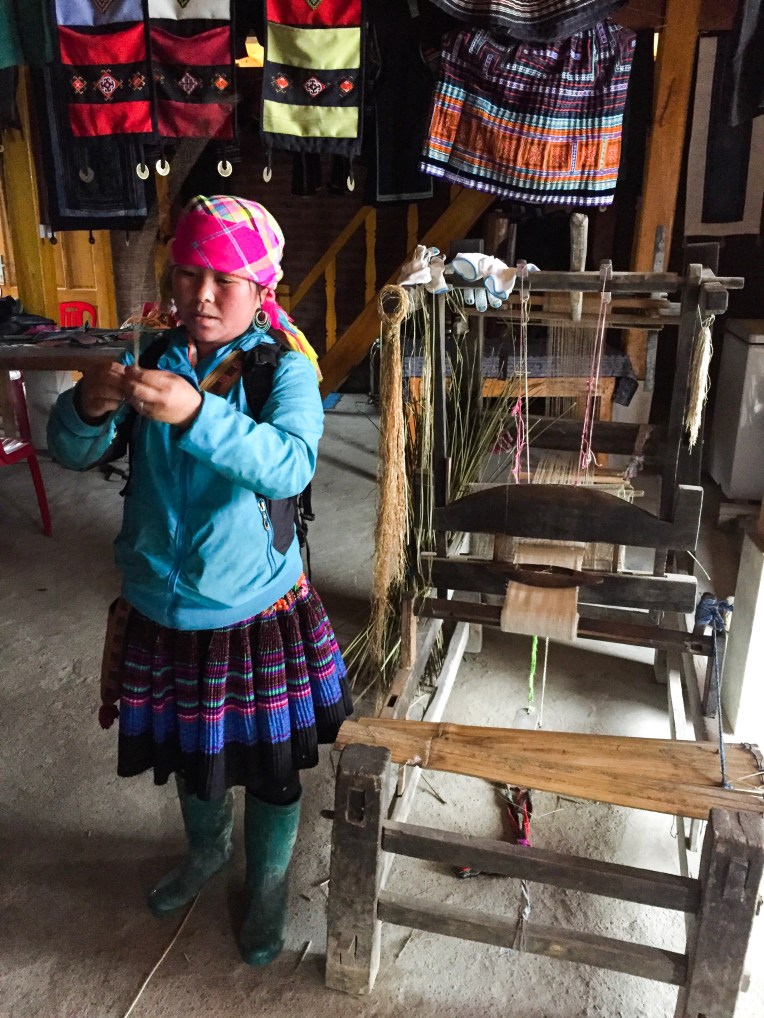
Nowadays, we live in a small house in the mountains with 12 people. We don’t have WiFi or power so we use bamboo and wood to make the fire and to cook. The men in our family do the cooking, while the women are responsible for weaving the traditional clothes. But we don’t do it to sell the clothes, we make them for ourselves. I started following tourist tours when I was 19 and now just started to learn English 5 months ago to guide the tours by myself. My husband does not speak English and he did not go to high school, so he is getting fire wood and brings it back o the village for a living.
How are the customers and traditions of marriage in your tribe?
The boys choose the girls. I had some boyfriends before my husband, but once the boy chooses you, you have to stay loyal. It is not good as a girl to say no to a boy, as it is bad for your reputation. Other boys might not want you after that and it’s bad for your family. I met my husband in Sapa two days before our marriage. The parents make an agreement and the boy needs to pay 8.000.000,00 to the mother of the bride. After that, the family celebrates with food at the husbands home and then husband and wife are allowed to sleep together for the first time. We all work in the, whether it is guiding the tours, making clothings, getting fire wood or working on the rice fields.
How does the process of rice planting work in this area?
At this time of the year (End of January) it is low season to us, that is why we can do the tours with the tourists from September to April. We don’t start planting the rice before April and then cutting the fields in September. In my family, 10 people can actively help to work on the fields, so on one day, we are able to finish two rice patties. We own 10 in total, so it usually takes around 5 days of hard work.
What happens with the rice after?
We use it for our own purpose, for food. That is all we eat if we don’t have enough money. If we have a little money we sometimes use it to afford noodles. Typical food for us would be rice daily with different site dishes such as potatoes, beans or ginger for example.
What is the difference between the Vietnamese culture and Black Hmong one?
The main difference is the clothing, we make and wear our own traditional clothes. Besides that, Vietnamese people have and worship temples, while we follow the Catholic Church or our sharmans. Also, we speak black Hmong as main language even though we also learn Vietnamese nowadays.
What are special days or events that your tribe celebrates?
The happy new year is a big tradition for us. We are having a big meal with the entire family and wear shiny, beautiful garments. And as part of this, couples get together, go for a walk and discuss their marriage and after three days they will get married.
How has tourism developed in this area?
It is getting more and more. We have a lot more tours now than we had before and home-stays are developing further to the guests needs. That’s why there is even WiFi around here now. But we do not have that in our houses. That is just for the tourists.
Thank you, Soso!
 rannaway - diary of a traveler
One thought on “The Local’s Perspective, Sapa Edition”