
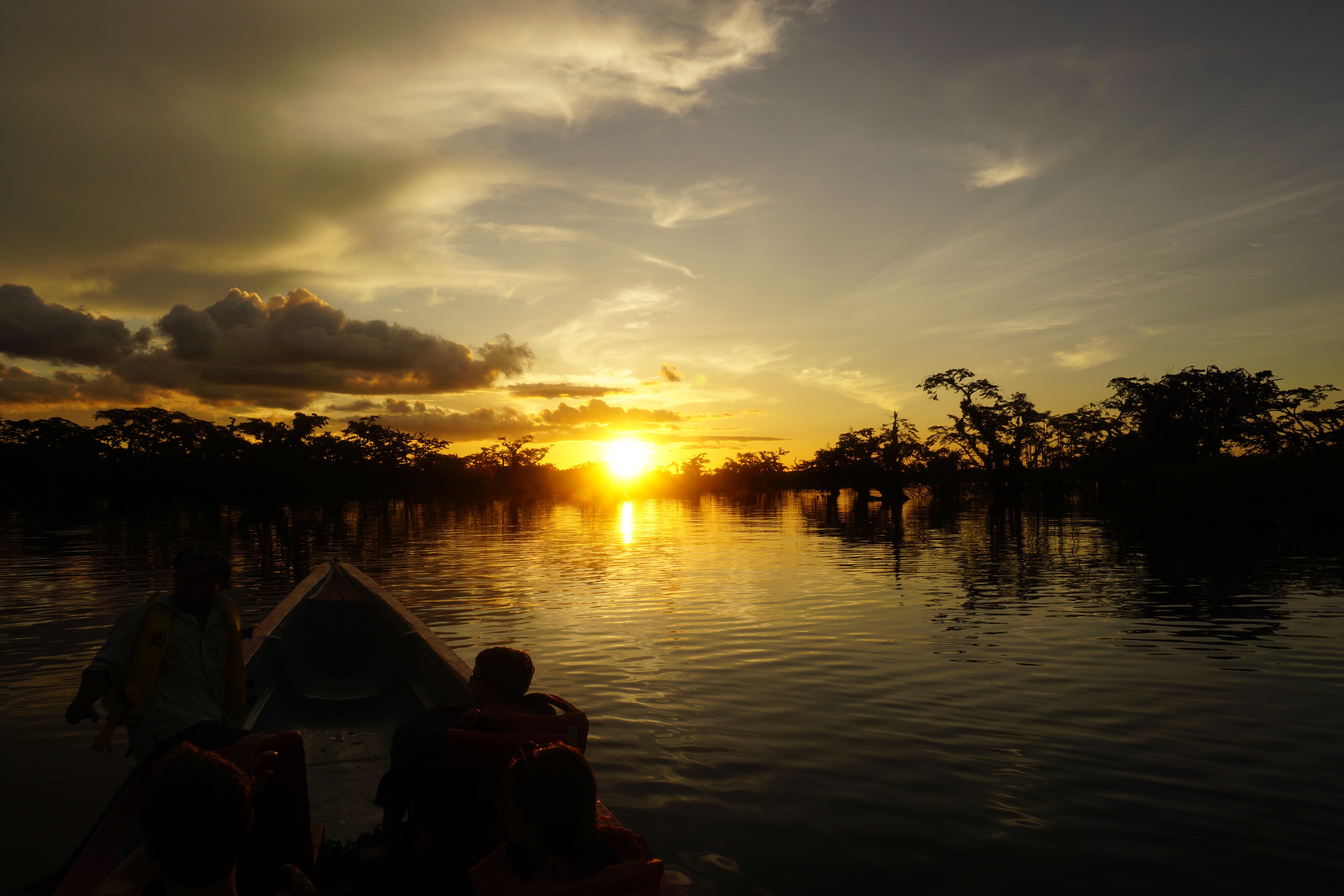
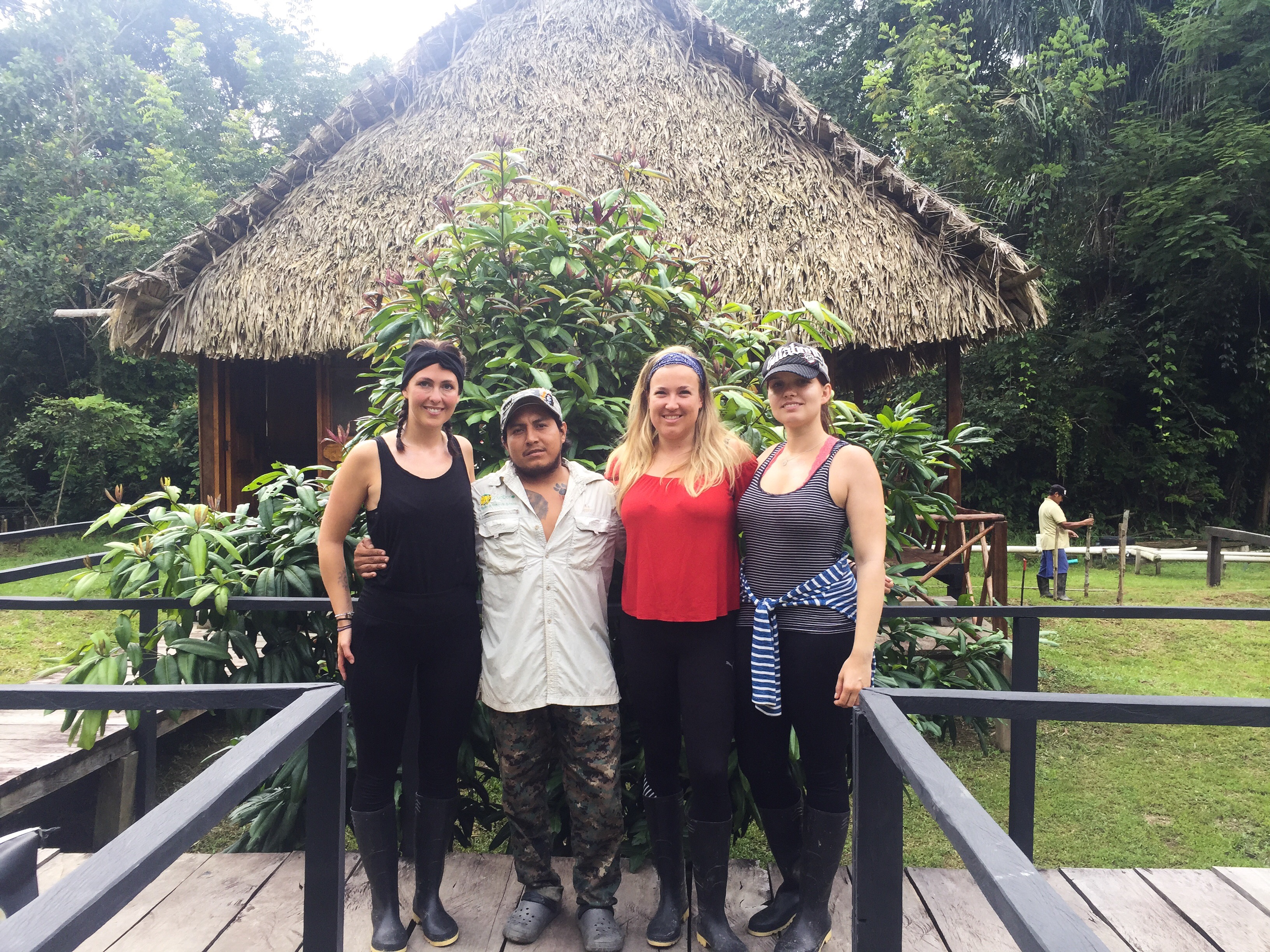
After I skipped ‘The Local’s Perspective’ in Chile, as we were mostly just hanging out with fellow backpackers on different tours, I am happy that I had the chance to interview Romolo, 30 y/o, during our four day Amazon rainforest tour. He grew up in and around the jungle and the Cuyabeno community and is an expert in wildlife, flora and fauna there.
How was growing up in the Cuyabeno community for you?
You know, when I was very little, I grew up here and had a real connection with this place, nature, the jungle. It was not very connected to the outside world, we didn’t have a phone, we used the Linea directa, which means we would contact people via the radio and it took us six or more hours to get to where the lodges are today, which today is only a two hour boat ride. If you live in that environment you just relate to it. But when I moved to the city to go to school and to live with my grandma, the connection I had changed. When you are younger, I guess you always connect with the environment you are living in, because you get used to it. I mean we suddenly even had TV. And that was kind of sad, to loose this connection to this place a little bit for a while.
My main interest for the rain forest started coming back when I was sixteen. I was always very active, always kept away from home and was a little wild. So, my parents decided to send me to the navy. I spent around three months there and usually you spent some months there, have a break of a couple days or weeks and go back. But I didn’t want to return, so around this time, I decided to live with one of the shaman families in the jungle, who were good friends with my parents. So that was, when my life took a big turn and changed. At first, I felt extremely stuck there, like I didn’t belong and the environment was different, even though I knew it from when I was very young. But after a while, I adopted again and got more and more used to their way of living. Fishing, hunting, exploring the river and the jungle.
I think every human being has an environment in which they feel their ultimate best and that is the jungle for me. The city just makes me tired and sick. Everything that I learned about the wildlife, flora and fauna, I’ve learned from the tribe, the shaman family and my own family.
How many tribes live in the rain forest around here?
There are five different tribes, but the one in this community is the Siona tribe – they are fishing, hunting, growing fruits and living a simple life. All communities now have their own schools, that’s one good thing that the government changed. Before they had to take a boat on the river and it took forever for the kids to get there. Also, the tribe has their own language, however they also learn Spanish, because otherwise they would not be able to communicate with outsiders.
What are typical dishes for this area?
The food in the jungle looks very simple but is actually very healthy. They eat Yuka bread around here, which they make by themselves. They catch fish and cook it or take other meat from the jungle, for example turtles, monkeys, taipers, birds that are similar to turkeys. But of course, nowadays we also have other food that we can just bring, like pasta and such things.
What impact does tourism have on the community and the forest?
Let’s start with the positive impact that tourism has had on this community. Tourists that come here are good for the economy of the people that are living there. The Siona tribe is running this part of the rain forest, they are renting out their boats, inviting us to their community to bake yuka bread or meet the sharman. So it is a new way of work for them and a new contribution to the whole community.
But of course, tourism also brings environmental challenges with it. Because of the boats and the people living in the lodges, there is more pollution going on and will effect nature and the animals over the long run. It would be great if the government would restrict tourism for certain months of the year so that the jungle can actually balance these challenges out more. But because there is money involved, the government would never allow that to happen. So, all we can do is spread awareness, remind tourists to respect rules that we have and do the best to keep this environment intact.
How did tourism develop over the past years in this area?
Around 15-20 years ago, we only had camp sites and allowed one tour a months with approximately 10-15 people maximum. Back then, there were around 300 tourists a year allowed to be here. Today, we are talking about 18.000 tourists a year. And that brings a big change with it, too. They built around 17 lodges in this area, everything looks different and there are certain rules now. Tourists need showers, we needs fire extinguishers, we have a telephone, Solar energy, stuff like that. Everything is now very adopted to tourism.
And why did you decide to work here as a jungle guide?
Because I grew up here and I want to have a positive impact by conversing the environment here. There are enough people that do not respect the rules, and I want to show people that there is a different way to deal with nature and truely respect it. Also, I like working here, because eventually I want to raise a family here. This is home.
What is the best and the scariest experience you’ve had in the rain forest?
Puh, there are so many stories to pick from. It is always amazing for me to see for example an anaconda eating, or an eagle catching a monkey, or a jaguar eating a turtle. That is very interesting and very cool. An eagle even tried to catch me once haha.
Scariest, hmm. One time, a caiman jumped into our boat and we all had to jump out. Of course, I was happy that nobody got hurt. Also, It was scary when a snake tried to bite me, or when I got bitten by a banana spider. A woman from the community then heated up some dried banana leaves to ease the pain. They learn that from the community scharman.
And finally, how would you describe Ecuador in three words?
Three words – puh, there are so many words, but I think it’s best described like this: Small country – big diversity. And not to forget the richness of nature in Ecuador. I don’t know how anybody would ever want to leave Ecuador.
Thank you, Romolo!
Note: There will be an additional post about the day by day activities of the rainforest tour. Stay tuned!
 rannaway - diary of a traveler